
Clarifying translation instructions
I’m considering the translation instructions about tags and figcaption content. The instructions seem ambiguous. It sounds like they mean not to translate the content of the
tag, such as the alt attribute. Usually, that’s how it is understood. However, the figcaption text isn’t in an
tag, so since they didn’t specify not to translate it, I think we should translate all the text except for the
tag and its content.Determining translation guidelines
I understand that we shouldn’t translate the tag elements and their content, like the alt attribute, but we can translate other text, including the figcaption. The phrase "leur contenu" likely refers to the
tag’s content. To stay on the safe side, I’ll translate all text except the
tags and their content. I also need to keep the HTML structure intact, translating the text within tags like p, h2, h3, and figcaption, while ensuring it sounds natural in German.Analyzing translation details
I’m breaking down the article for translation, starting with the first chunk. It opens with "European leaders showcased their surging defense spending at the summit," and I’ll translate it to "Europäische Führer präsentierten auf dem Gipfel ihre wachsenden Verteidigungsausgaben." I notice "defense" is British English, spelled "defence," and in German, it should be "Verteidigungsausgaben" or "Verteidigungsbudgets." I’ll translate "to ramp up budgets" as "ihre Budgets zu erhöhen" or "Ausgaben zu erhöhen," and "and take more responsibility for their own security" becomes "und mehr Verantwortung für die eigene Sicherheit zu übernehmen."Refining the translation
I’m working on crafting the translation: "Europäische Führungspersönlichkeiten präsentierten auf dem Gipfel ihre zunehmenden Verteidigungsausgaben." It feels slightly formal, so I’m considering alternatives for "surging." Options like "stark steigenden" or "exponentiell steigenden" come to mind. I think I’ll go with "ihre stark steigenden Verteidigungsausgaben" for clarity.
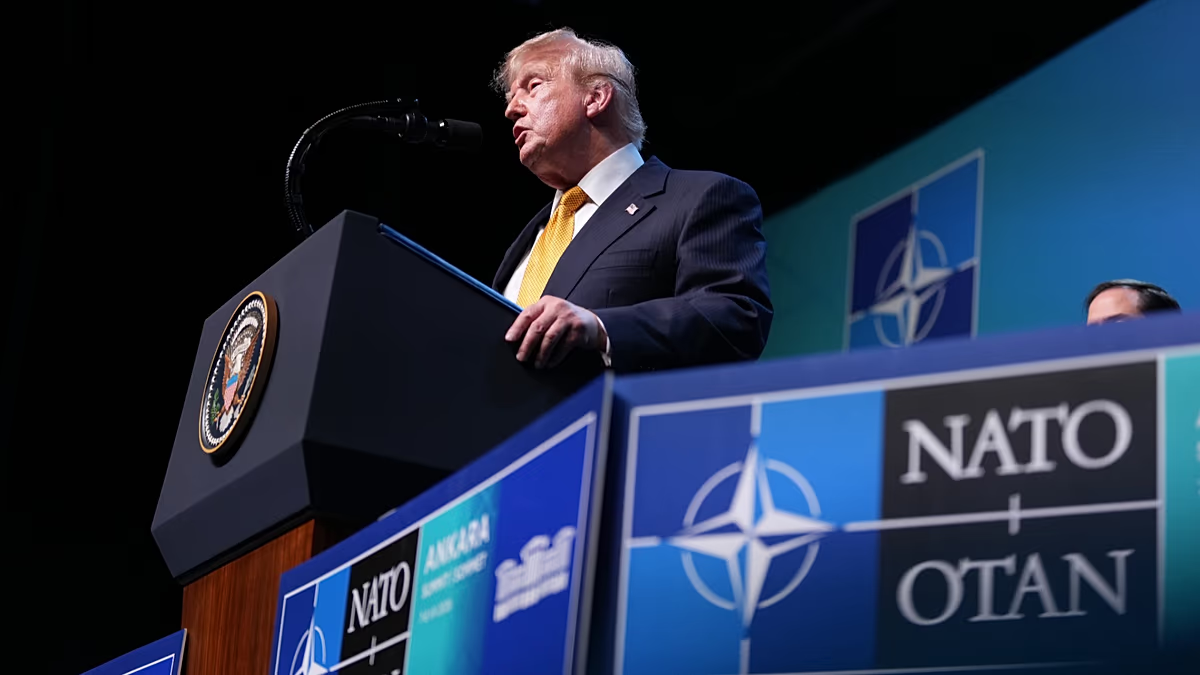
So, the complete translation becomes: "Europäische Führer präsentierten auf dem Gipfel ihre stark steigenden Verteidigungsausgaben, während sie versuchten, Trump davon zu überzeugen, dass sie sein Versprechen erfüllen, die Budgets zu erhöhen und mehr Verantwortung für die eigene Sicherheit zu übernehmen."
